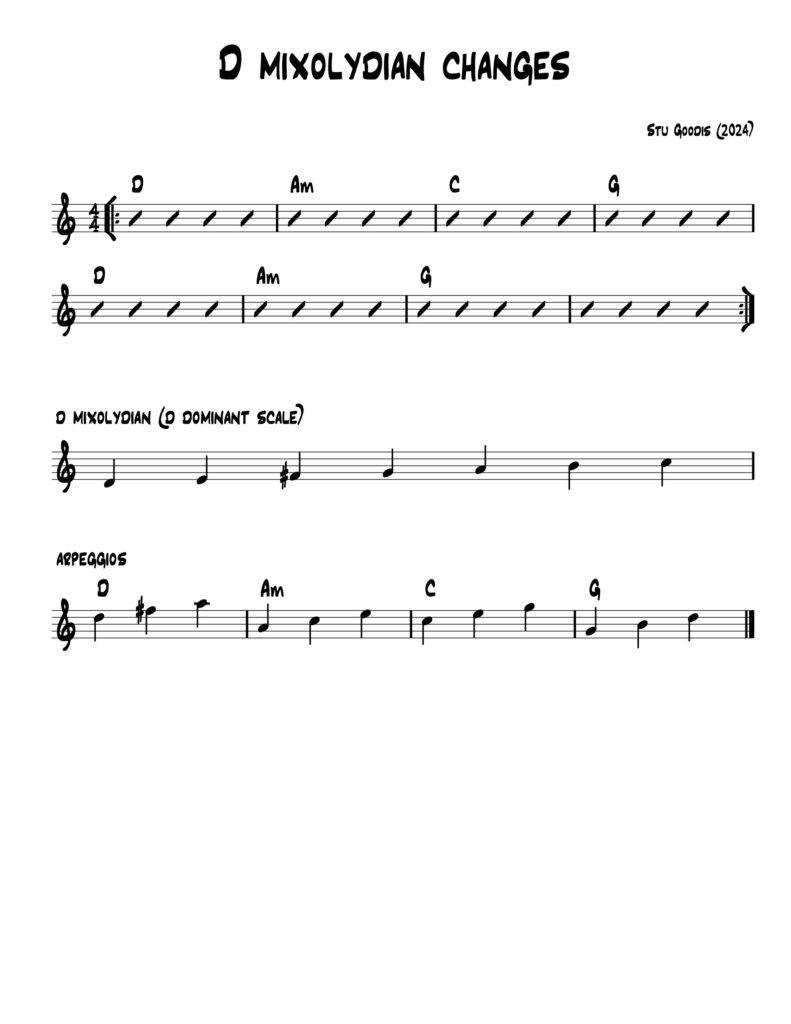
When you combine a D major chord with C major and/or A minor, the resulting sound implies the D Mixolydian mode. Here are two basic approaches to improvising melodies in this context:
1. Scale-Based Approach
Improvise using the D Mixolydian mode, letting the underlying chords guide your melodic choices. This approach creates a generally pleasing result—most notes will sound consonant, while the occasional clash can be naturally resolved by moving up or down to a nearby chord tone.
2. Chord Tone-Based Approach
Alternatively—or more accurately, in addition to the scale—you can build your melodies around the specific tones of each chord. This produces lines that clearly reflect the harmonic movement, making your phrasing more intentional and grounded.
In Practice
These two approaches should complement each other and ideally blend together seamlessly. The scale provides flow and melodic freedom, while chord tones add structure and harmonic clarity. Striking a balance between the two creates more expressive and musically satisfying improvisation.